Vang Vieng weather and the best time to visit
Vang Vieng weather is best approached through a broad seasonal framework followed by checks for the activities you intend to do. The cooler part of the drier period is a useful starting point when choosing the best time to visit Vang Vieng. A season label, however, does not decide river conditions, cave access or whether a balloon can fly on a particular morning.
Build a plan around the landscape experiences you want, then leave room to adjust them. Kayaking on the Nam Song, a cave visit and a climb to a viewpoint involve different conditions. Compare the river activities with the lagoon, cave and viewpoint visits before deciding which should anchor your stay.

Cooler dry period and hotter months
The national seasonal model places the coolest phase from November to January and the hottest phase from March to May. The Lao country report for 2023 describes a broadly drier period from mid-October to mid-May and a rainy period from mid-May to mid-October. This is historical country-level guidance, rather than a precise local calendar for Vang Vieng.
Use the cooler part of that model as a starting preference if you want to combine several outdoor activities. Then assess the actual forecast and arrangements for your dates. Choosing a month should help organise priorities, rather than commit you to a fixed programme regardless of what the river or access routes are doing.
Keep arrival arrangements separate from a weather-sensitive outing. The train and road guide explains the additional station and airport legs. An arrival day with several connections deserves its own plan before you add a flight or a river activity to it.
A balloon flight to plan for
When planning a balloon flight, clarify the conflicting transport information before booking.
Hand-picked tours, booked through GetYourGuide. Prices are indicative starting prices in US dollars (as of November 2026). Tap a tour for live availability and the current price in your currency.

A weather-dependent balloon option
The balloon outing offers a 30-minute flight. Clarify launch-site transport before booking, because its transfer descriptions conflict.
Rain, water levels and river activities
Rain and river conditions affect the practical decision about a Nam Song outing, so the current local assessment matters more than a general rainy-season label. River tubing and cave tubing are different activities, and a kayaking plan should be assessed on its own route and operating arrangements. A listing of an activity does not settle whether it runs on your date.
The weather warning published on 31 August 2026 covered flash floods and landslides on 1 and 2 September 2026, including Vang Vieng. That warning expired on 2 September 2026. Use it as a dated example of why forecasts and water levels matter, rather than as a current closure notice or a recurring seasonal ban.
A press report on 3 November 2026 described discoloured water in the Nam Song. The report does not establish a laboratory result, a current swimming decision or an end date for the event. Water appearance is therefore a separate consideration from the season. Seek current advice about the activity itself, and avoid treating a familiar river photograph as today's conditions.
Nam Xay and Pha Ngeun involve steep ascents, while cave and lagoon visits have their own access questions. Make the decision for each stop, including the approach route, rather than describing every outdoor destination as either open or closed because of the month.
Visibility and weather-dependent balloon flights
A Vang Vieng balloon flight depends on suitable conditions, and choosing a morning or evening option does not promise a visible sunrise or sunset. Think of the flight as one possible part of the stay rather than the basis for every other booking. Compare the balloon options and arrangements before setting the rest of the day around one.
The balloon option presented here describes a 30-minute flight. Its hotel pickup and return are listed for the city area, but transport to the launch site is also excluded. Clarify who covers that start-site journey before booking. Flight time should be kept separate from the complete outing, including meeting, transport and preparation.
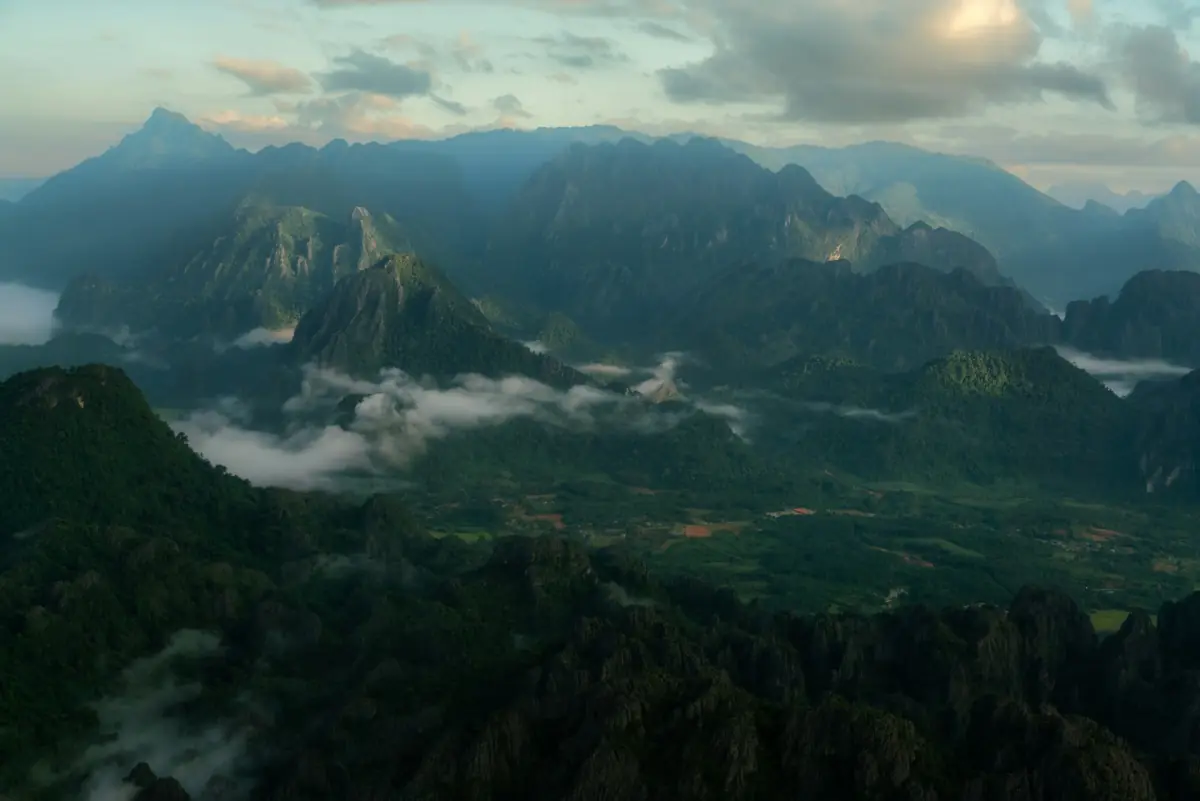
Leave space for changes in your itinerary and keep the activity's actual arrangements at hand. A seasonal preference does not promise clear views over the karst, a particular water colour at a lagoon or operation of a balloon flight. Choose between activities by what conditions allow on the day.
What regional climate data can tell you
Regional rainfall data for Vientiane describe Vientiane, rather than Vang Vieng's local climate. The published comparison uses the historical reference period 1991 to 2020. It helps explain why a broad seasonal distinction is useful, but should not be relabelled as monthly rainfall for the town you are visiting.
A local monthly table would need Vang Vieng's own suitable records, including temperature normal values. Regional rainfall figures do not supply local maximum and minimum temperature normals. Use this distinction when comparing climate summaries, and use a current forecast for the days ahead rather than reading a long-term average as a prediction.
Questions about Vang Vieng weather
When is the cooler part of the year?
November to January is the coolest phase in the national model used to plan a Vang Vieng visit, from the Lao country report for 2023. The report gives a national seasonal pattern, so use it as historical planning context for Vang Vieng. Current forecasts and local conditions still matter when deciding on a river outing, viewpoint climb or balloon flight.
Does a dry-season visit guarantee a balloon flight?
No, a dry-season visit to Vang Vieng does not guarantee a balloon flight or a visible sunrise or sunset. The outing depends on suitable conditions. Keep flight time separate from the whole excursion and clarify launch-site transport for the option here, whose pickup and transport descriptions conflict.
How should I use Vientiane rainfall figures?
Vientiane rainfall figures should be treated as a regional comparison for the historical period 1991 to 2020. They describe another city, rather than monthly conditions measured in Vang Vieng. They also do not provide Vang Vieng's maximum and minimum temperature normals or predict the weather on your travel dates.